
The universe of stocks trading at a 12-month forward price-to-earnings (P/E) multiple of 50x or more has swelled by 2.5x to 104, indicating the growing froth in the market. In March 2023, the number of stocks with a P/E of 50x and 100x stood at 41 and 3, respectively, which has now grown to 104 and 9, according to an analysis by Kotak Institutional Equities (KIE).

Sundararaman Ramamurthy has assumed charge as managing director and chief executive officer of leading stock exchange BSE. In a regulatory filing last year, BSE said that markets regulator Sebi has approved the appointment of Ramamurthy as its MD and CEO. "Sundararaman Ramamurthy has assumed charge as MD and CEO of BSE," the exchange said in a release on Wednesday.

'We have done tremendous automation in the stock markets'.

Prime Minister Narendra Modi inaugurates the Navi Mumbai International Airport and a portion of the Mumbai Metro Line, marking significant improvements to transportation infrastructure in Mumbai.

The National Stock Exchange (NSE) on Monday cautioned investors against some fraudsters running illegal dabba trading with guaranteed returns to investors. Dabba trading is an illegal form of trading in shares, where operators of such trading rings allow people to trade in equities outside the stock exchange platform. The cautionary statements came after NSE found that the entities -- Shri Parasnath Commodity Private Limited, Shri Parasnath Bullion Private Limited, Faary Tale Trading Private Limited and Bharat Kumar (associated with Trade with Trust) --were providing dabba or illegal trading platform with assured returns.

A Delhi court on Monday sent to 14-day judicial custody the former managing director and chief executive officer of National Stock Exchange Chitra Ramkrishna in connection with the co-location scam case.

Maharashtra Congress chief Nana Patole on Monday alleged that the agenda of the upcoming special session of Parliament is to separate Mumbai from the state and declare it as a Union territory.

In a departure from big gains in the past two years, investors saw around Rs 20 lakh crore of their wealth eroded as Indian equities tanked in 2011 because of inflation, high interest rates and the uncertain global growth environment accentuated by the euro zone debt crisis.

The biggest losers on the National Stock Exchange's benchmark Nifty 50 index are stocks that have seen the highest turnover over the past 12 months, according a report by Morgan Stanley.
The performance has been a clear contrast to the movement in the first two months of 2014, when the S&P BSE PSU index massively underperformed the S&P BSE Sensex (down 0.2 per cent) by slipping nearly seven per cent.
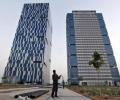
The International Financial Services Centres Authority (IFSCA) has proposed key exemptions to the current listing framework and measures for setting up holding companies (holdcos) and special purpose acquisition companies (SPACs) to encourage domestic startups list at GIFT City, the country's only international financial services centre (IFSC). Under the current framework, to be eligible to list on IFSC exchanges, an issuing company should have operating revenue of at least $20 million in the preceding financial year and average pre-tax profits of at least $1 million during the preceding three financial years. An expert committee has noted these conditions have acted as hurdles to listing new-age companies, and they need a relook.

Among Sensex firms, Bajaj Finance and Bajaj Finserv were the biggest gainers. Asian Paints, Larsen & Toubro, Trent, UltraTech Cement, Eternal and Adani Ports were also among the winners. However, Tata Motors, Infosys, Tech Mahindra and Axis Bank were among the laggards.
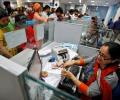
Banks have tightened their cyber security network to ward off any cyber threat in the wake of India launching missile attacks on Pakistan and Pakistan-occupied Kashmir. Banks have also improved their security at the branches near border areas due to heightened threat of a counter attack.
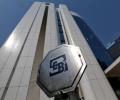
Capital markets regulator Sebi has kept in 'abeyance' the proposed initial share sale of securities depository NSDL. However, the Securities and Exchange Board of India (Sebi) did not clarify further. The National Securities Depository Ltd (NSDL) filed its preliminary papers with the capital markets regulator on July 7.
The stock exchange on which they are traded boasts higher profits than most of the companies whose shares are hitting new highs. Only 37 of approximately 2,000 listed companies with comparable data for 2022-23 (FY23) reported higher profits, while the rest had lower profits. Despite rising corporate profitability, the universe of companies that outperform the National Stock Exchange (NSE) in terms of profitability has been shrinking of late, according to an analysis of companies with comparable data over the past seven years.

Mutual funds (MFs) reinforced their record monthly inflows in October with an investment of Rs 87,000 crore (up to October 29), softening the downside pressure on domestic markets. Their prior record for monthly inflows was Rs 48,139 crore in May. This unprecedented monthly buying partially countered record monthly sales by foreign portfolio investors (FPIs) of Rs 1.1 trillion last month.

Last month, the National Stock Exchange witnessed 'flash crash', when the Mumbai-based brokerage Emkay Global Financial Services sent the exchange index tumbling as much as 15.5 per cent in just a few seconds, creating a panic among traders.

The BSE Sensex has been one of the top-performing areas of investment in the past 40 years, consistently delivering double-digit returns in rupee terms, beating assets such as global equities, precious metals, and fixed income.
The National Stock Exchange (NSE) of India is going to indefinitely defer the internal deadline set for extending trading hours, according to sources in the know. The exchange aimed to introduce a three-hour evening session exclusively for index derivatives by March 2024, contingent upon regulatory clearance from the Securities and Exchange Board of India (Sebi). Sources indicate that the market regulator has not provided a favourable indication, dimming optimism surrounding the proposal.

The share of Ahmedabad in the total value of trades on both the BSE and NSE is set to touch double digits for the third year in a row.

Tata Motors on Monday said the voluntary delisting of its American Depositary Shares, representing ordinary shares, from the New York Stock Exchange will become effective close of trading on January 23, 2023. After Monday, there will be no over-the-counter market trading of the American Depositary Shares (ADSs) in the US due to regulatory restrictions under the Indian law, Tata Motors said in a regulatory filing.

Vedanta, a conglomerate in mining and metals, has seen a surge in its share price on the back of multiple triggers. Its demerger appears to be on track, a strong non-ferrous commodity cycle is boosting margins, and silver bulls are interested in Hindustan Zinc, its subsidiary.

Equity trading volumes, both in the cash and derivatives segments, dropped in March amid wild swings in stock prices. The average daily trading volume for the cash segment (National Stock Exchange, or NSE, and BSE combined) fell by 16.3 per cent to Rs 1.07 trillion - the lowest since November 2023. Market players said the drop could have been sharper if not for the large block deals in companies such as ITC, Tata Consultancy Services, and IndiGo seen during the month.
List of disappearing entities could see additions, for first time in 20 years.

Stocks in the automotive, financial, cement, metal, and hotel sectors are likely to benefit if the Narendra Modi-led Bharatiya Janata Party (BJP) comes back to power for a third time. The key investment themes have been identified after analysing the Sankalp Patra - the party's manifesto for the next five years - released on Sunday.

The National Stock Exchange (NSE) and BSE on Tuesday said they will conduct a special trading session in the equity and equity derivative segments on May 18 to check their preparedness for handling major disruptions or failure at the primary site. The special live trading session will have an intra-day switchover from the Primary Site (PR) to the Disaster Recovery (DR) site.

India's fair trade regulator Competition Commission of India (CCI) has launched a formal investigation against India's biggest paints firm, Asian Paints, for alleged abuse of its dominant position in the organised decorative paints market, following a complaint by Aditya Birla group's Grasim Industries' Birla Opus Paints division.

The 30-share BSE Sensex surged by 477.24 points or 0.83 per cent to close at more than one-week high of 57,897.48. As many as 28 of its constituents closed with gains while two declined. The broad-based Nifty of the National Stock Exchange rose by 147.20 points or 0.86 per cent to settle 17,233.45, tracking gains in Sun Pharma, Asian Paints, and Reliance Industries.

Mutual funds (MFs) have lined up information technology (IT) funds, indicating that technology stocks are back on fund managers' radar after a hiatus. Over the past 18 months, stock prices for companies in the software space have either corrected or remained subdued. Fund houses have launched five IT-based sectoral funds in the past three months, with three of them taking the passive route.

The National Stock Exchange (NSE) on Thursday warned investors not to fall prey to investment schemes with assured returns offered by Sameer Gulabrao Thite associated with Samsan Unitrade. The exchange pointed out that the person and the entity are not registered either as a member or authorised person of any registered member of the NSE. The cautionary statement comes after the NSE noticed that Sameer Gulabrao Thite associated with Samsan Unitrade was offering the service to handle trading accounts of investors by asking them to share their user identification (user ID) and password.

Not all listed companies above a threshold have spent on corporate social responsibility (CSR) in the way they were required to do. The aggregate unspent amount in 2022-23 (FY23) stood at a five-year high of Rs 1,475 crore. In FY23 listed companies spent Rs 15,602 crore while the amount to be expended was Rs 15,787 crore, according to the data from corporate tracker primeinfobase.com.

Stock exchanges, clearing corporations, depositories, stockbrokers and Sebi-registered participants operating through these institutions have been exempted from the lockdown.
Tata Securities is all set to revive stock broking, given the current investor interest in equities.

Framing the next chapter in Swiggy's journey as a responsible corporate citizen, co-founder and chief executive officer (CEO) Sriharsha Majety unveiled the company's eagerly awaited public listing. Majety, who has largely shunned the spotlight, shared reflections on his entrepreneurial path and the strategic pivots he and his co-founders navigated in building Swiggy. "We started with code aggregation, then pivoted to logistics, and that became Swiggy.
Among the Sensex firms, Bharat Electronics Ltd, Mahindra & Mahindra, Adani Ports, HCL Technologies, Eternal, Infosys, Bharti Airtel, Sun Pharmaceuticals, Larsen & Toubro, Hindustan Unilever and UltraTech Cement were the gainers. Bajaj Finance, Tata Motors Passenger Vehicles, Kotak Mahindra Bank, PowerGrid and Tata Steel were among the laggards.

The National Stock Exchange (NSE) on Monday asked investors not to put their money in guaranteed returns investment schemes offered by three individuals. The advisory came after the exchange found that the three individuals -- Veena (associated with Algo Master), Ankita Mishra and Vishal -- were offering such schemes. In a statement, the bourse said that these persons are not registered either as members or authorised persons with any registered member of the NSE.
Mahindra Holidays and Resorts India Limited's stock got listed on Thursday on the National Stock Exchange and its price opened 5 per cent higher at Rs 315 over the issue price of Rs 300.

About two-thirds of the incremental net income of the Nifty 50 over FY19-24 has come from companies in relatively low-valued sectors such as banks, diversified financials, IT services, and metals and mining.

The CBI on Friday questioned former CEO of National Stock Exchange (NSE) Chitra Ramkrishna in view of fresh facts emerging in connection with its ongoing probe into the alleged abuse of co-location facility in the NSE, officials said. The agency has also opened look out circulars against Ramkrishna, another former CEO Ravi Narain and former COO Anand Subramanian to prevent them from leaving the country. The central probe agency had booked a owner and promoter of Delhi-based OPG Securities Pvt. Ltd, Sanjay Gupta and other in connection with alleged abuse of NSE co-location facility to make gains by getting early access to the stock market, they said.

NSE chief says they're ready; positive feedback to Sebi draft.
